
Not financial advice. Read our full disclaimer.

−508 points · −22.6% · the largest one-day drop in Dow history
Monday, October 19, 1987, 9:30 AM Eastern. The opening bell rang on Wall Street — and almost no one wanted to buy. All weekend, investors had watched Hong Kong’s market plunge, then Europe follow. When New York opened, everyone wanted out at once, and there was barely anyone on the other side.
Before the bell, the pressure had built like a wave against a wall. Ninety-five S&P 500 stocks couldn’t even open on time — the sell orders were that lopsided. In Chicago, the futures markets opened on schedule and were immediately swamped. And the computers running “portfolio insurance” — programs built to sell stocks automatically as prices fell — did exactly what they were built to do: they sold, and sold, and sold.
By the closing bell, the Dow Jones Industrial Average had fallen 508 points — 22.6% of its value — to 1,738.74. The S&P 500 lost 20.5%. London’s FTSE fell 25% over the week; Tokyo’s Nikkei dropped 13%. Worldwide, an estimated $1.71 trillion in market value vanished in a single day.
A record 604 million shares changed hands on the NYSE — three times a normal day — and the exchange’s own computers were overwhelmed, leaving orders unfilled for an hour or more. The Fed’s systems jammed too. For a few hours, the most sophisticated financial machinery on Earth simply broke.
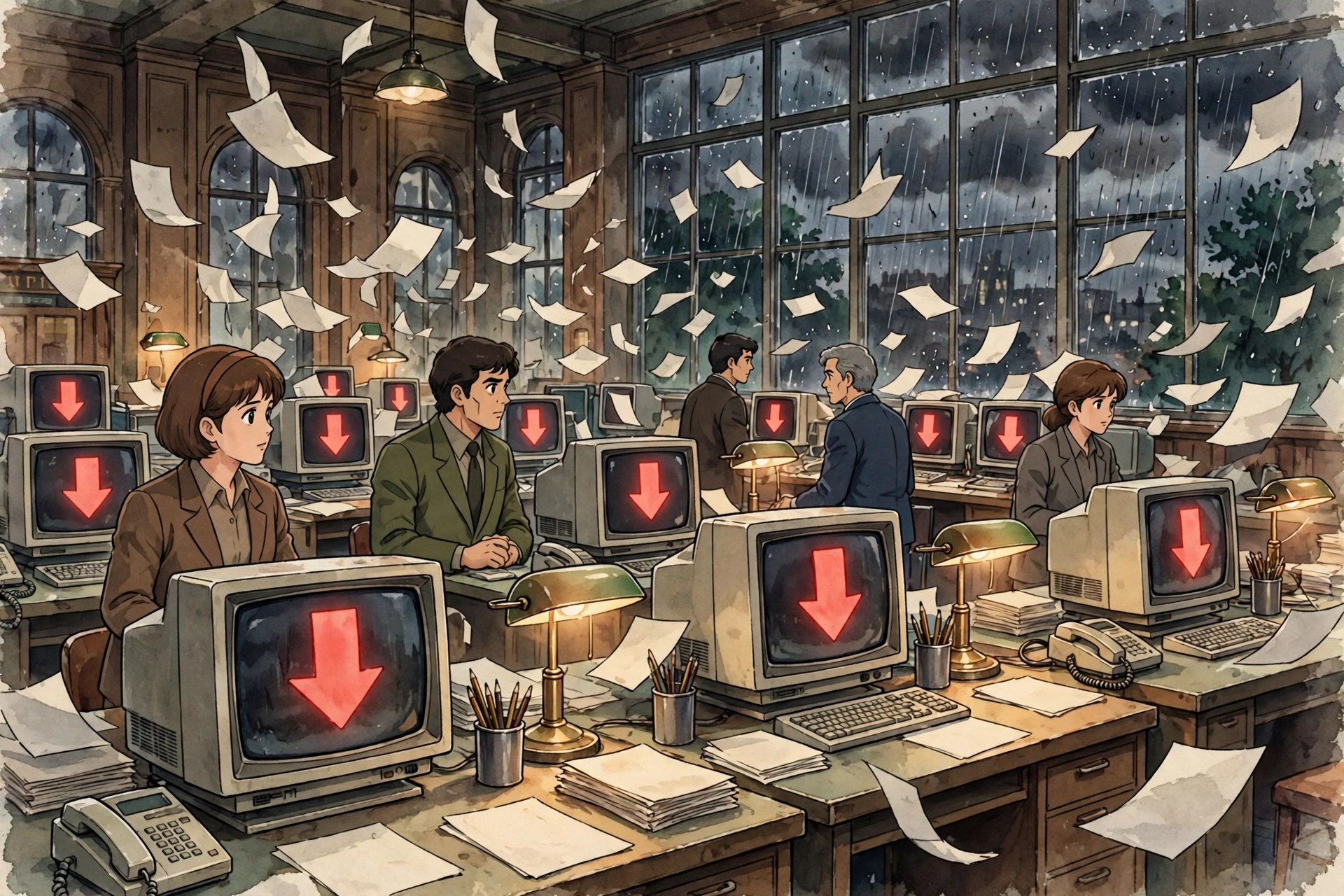
$1.71 trillion erased worldwide · 604 million shares traded · systems overwhelmed for hours

The panic had a silver lining: it proved the economy was tougher than the tape. Alan Greenspan, just two months into his job as Federal Reserve chairman, put out a one-sentence statement before markets opened the next morning — the Fed stood ready to serve as a source of liquidity. That calm, boring sentence did more than any bailout could have.
The Dow began climbing back in November. Within two years it had recovered everything — and no recession ever followed. The crash’s most lasting legacy was the circuit breaker: the automatic trading pauses that still kick in today when markets fall too fast. Black Monday became a lesson instead of a catastrophe.
Then vs now: $10,000 invested in the S&P 500 at the October 19, 1987 close (about 224.84) would be worth roughly $343,000 today (S&P around 7,722) — price gains alone, dividends not included. Approximate — but the lesson is exact: panic is the only guaranteed way to lose money in a crash.
Want more stories of markets surviving their worst days? Read our first Calm Trader story — the 20 minutes that erased $1 trillion back in 2010. Our daily market news walks through the headlines that move stocks on any ordinary session — most of them forgotten within a week. And our weekly scan ranks the market’s loudest moves — the noise that tempts traders to act, and rewards those who wait.
The price of panic is permanent. The reward for stillness compounds.
Not financial advice. Breathe, zoom out, and sit still.


Leave a comment